The morning rush: how to keep your café queue moving without losing customers
The morning rush makes or breaks a café. Here is how to keep the line moving, cut the wait people actually feel, and stop losing the customer who sees five heads and walks on to the next place.
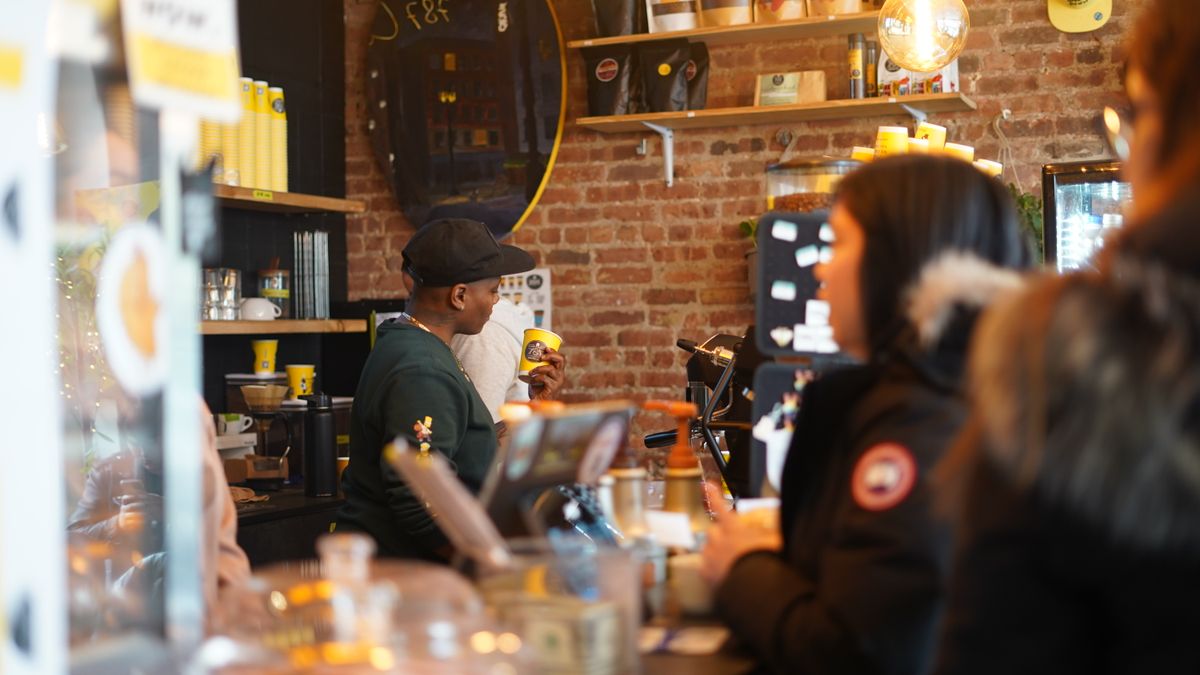
There is a specific moment that decides your morning takings, and it happens on the pavement. Someone on their way to work glances through your window, counts five people at the counter, does the maths in their head, and keeps walking to the place two doors down. You never see them. You never even know they were there.
That is the morning rush in one image. For forty minutes a day your café makes most of its money and loses most of its would-be customers, and the difference between the two usually is not the coffee. It is the line, and how long the wait feels.
Here is what I have learned about keeping a café queue moving, so more of those pavement glances turn into orders.
The wait people feel is not the wait on the clock
Ask a customer how long they queued and they will almost always overestimate. A four-minute wait feels like ten when you are staring at the back of someone's coat with no idea how much longer it will be. The same four minutes feels like nothing if you know exactly where you are in the line and you can do something else while you wait.
That gap, between real time and felt time, is where you have the most room to work. You cannot always pull a shot faster at 8:15am. You can almost always make the wait feel shorter and more certain. And certainty is the thing people are actually buying when they choose the shorter-looking line.
We wrote a whole piece on the psychology of this in why customers leave your queue, and cafés are the clearest example of every point in it.
Why people abandon a café line
Three things push someone out of your queue, and none of them is "the coffee took too long."
- Uncertainty. No sense of how many are ahead or how long it will take. The brain fills the gap with the worst case, and they leave.
- A crowded doorway. When the line spills into the entrance, the café reads as "full and chaotic" from the street, and the next person does not even come in.
- Being stuck. People will happily wait five minutes if they can wait it out on their phone, by the window, or on the pavement in the sun. They will not wait two minutes if it means standing frozen in a scrum, unable to step away without losing their place.
Fix those three and you keep customers you are currently losing without touching your workflow behind the counter.
Split the order from the wait
The single biggest change is to stop making "join the line" and "wait at the counter" the same act.
The moment someone can secure their place without physically standing in it, the whole dynamic changes. They order or join from their phone, they get a spot in the queue, and then they are free. They can wait by the window, grab a table, or step outside and come back when it is nearly their turn. Your counter stops being a bottleneck and becomes just the pickup point.
This is exactly what a QR queue does for a café. A small code by the door or on the counter lets a customer scan, join the line from their own phone, and watch their place update in real time. No app to download, no card to tap, no shouting names over the machine. They see "3 ahead of you, about 6 minutes" and they relax, because now they know.
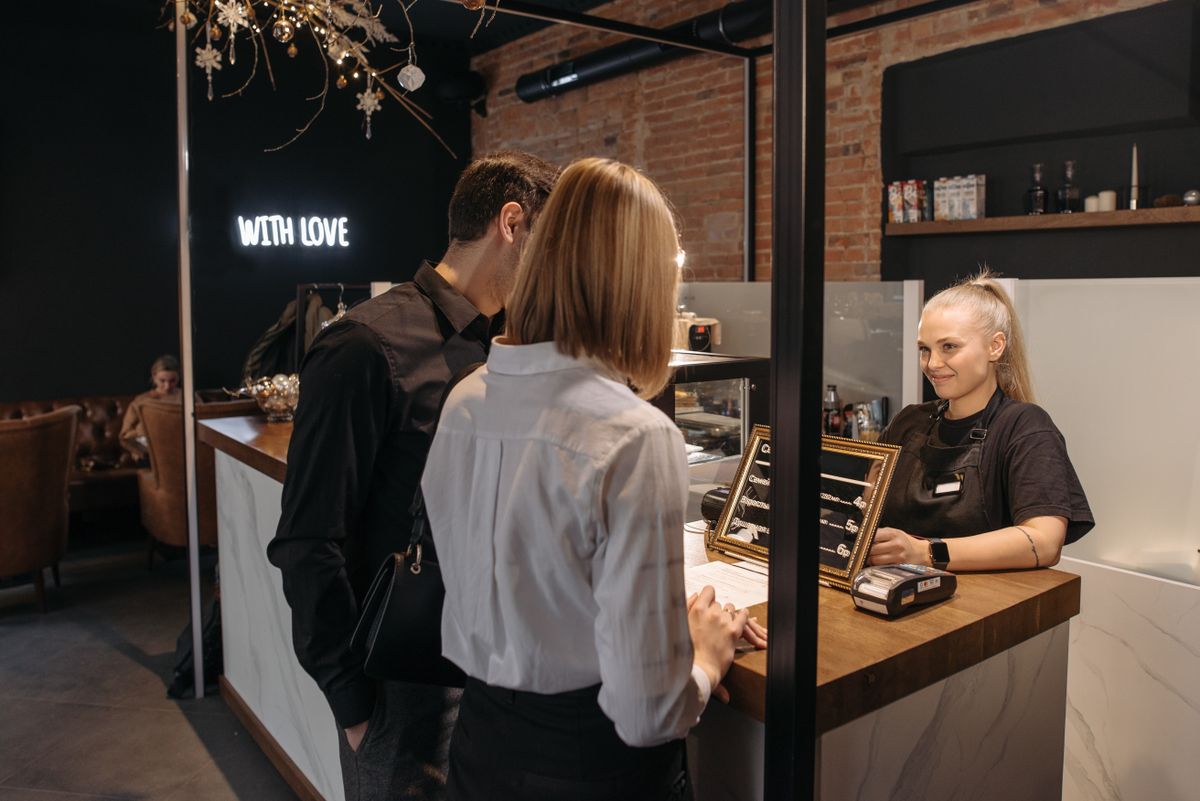 A calmer counter starts with a line that does not have to physically stand at it. Photo: Pavel Danilyuk via Pexels.
Make the wait visible
If you take one thing from this, make it this: show people the number.
A customer who can see "you are 4th, roughly 7 minutes" behaves completely differently from one who cannot. They stop hovering. They stop asking your staff "how much longer?" every ninety seconds, which is the question that actually slows your team down. They trust the line, because the line is finally telling them the truth.
A live count does double duty. It calms the person already waiting, and it reassures the person on the pavement that the queue is shorter than it looks and moving. "Five people" is scary. "Five people, about eight minutes, and you can wait outside" is an easy yes.
Free up the doorway
Walk out to the street during your rush and look at your own shop the way a stranger would. If the line reaches the door, you are turning away the people who have not come in yet, silently, all morning.
When customers can hold their place from their phone, they stop clustering at the counter. They spread out. The doorway clears. And a café that looks calm and moving from the street pulls people in, while a café that looks jammed pushes them to the competitor down the road. If you want the details on this, our guide on where to put your queue QR code covers the window placement that quietly does this job for you.
Pre-batch the predictable
This one is about your side of the counter, not the customer's. Your morning rush is not random. You know roughly when it hits and what it orders, because it is the same commuters ordering the same drinks at the same time most days.
Use that. Pre-grind for your peak, get milk pitchers ready before the wave, and set up your station so the ten most common orders need the fewest movements. None of this shortens the queue on its own, but it lifts your real throughput, and a faster real line makes every other trick above land harder.
Where to start
You do not need to rebuild your café to fix your mornings. Start with the two changes that cost nothing and move the needle most: let people hold their place without standing in it, and show them where they are in the line. Those two alone turn the anxious pavement glance into an order.
If you want to try it, Filaro turns your line into a QR code your customers scan to join from their phone, with a live position and wait time, no app and no hardware. It was built for exactly this: barbershops, clinics, and the café morning rush. You can set it up in an afternoon and have it running for tomorrow's wave.
Photos via Pexels: morning café line by H. Hümâ Yardim, barista at the counter by Pavel Danilyuk.