Take-a-number ticket machines vs a QR queue: which fits a small shop?
The take-a-number ticket machine has run queues for decades. But for a small shop, a QR queue does the same job without the hardware, the paper, or making people stand and stare at a screen. Here is an honest side-by-side.

You know the machine. A red box on the wall, a roll of paper tickets, and a little display above the counter that clicks from 47 to 48. Take a number, find a spot, watch the screen. Deli counters, pharmacies, and government offices have run their lines this way for decades, and for good reason: it works.
But "it works" and "it is the right fit for a small shop" are two different questions. If you run a barbershop, a café, or a small clinic and you are weighing a ticket dispenser against a QR queue, here is the honest comparison, including the cases where the old machine still wins.
How the take-a-number machine works
The model is simple, which is why it lasted. A customer walks in, pulls a paper ticket with a number, and waits until that number shows up on the display. Staff press a button to advance to the next number. No names, no guessing who was first, no arguments about who is next.
That last part is the real magic of the ticket machine: it settles order. Everyone can see the number, everyone accepts it, and the "were you before me?" tension disappears. Any replacement has to do that job at least as well.
Where the machine falls short for a small shop
The ticket dispenser was designed for a busy counter with wall space and a hardware budget. Drop it into a small shop and the cracks show.
- It is hardware you buy, mount, and maintain. A dispenser, a display, wiring, and a controller. Then paper rolls to reorder, and a wall to drill into that a rented shop may not let you touch.
- People still have to stand there. The whole point of a number is knowing your place, but a paper ticket cannot tell you how long. So most people stay near the counter and watch the screen anyway. The crowd never really clears.
- A crowded room still looks full from the street. If the machine keeps everyone hovering by the display, your shop reads as "jammed" to the next person walking past, and they keep walking.
- No wait estimate, no notification. The screen says 48. It does not say "about twelve minutes." And if you step out for air, nothing pings you when you are close. Miss your number and you are back to the counter to start again.
- Lost tickets and skipped numbers. Paper gets dropped, numbers get called with nobody there, and staff end up managing the machine as much as the customers.
None of these are dealbreakers at a busy passport office with staff and space to spare. In a shop with one counter and a small waiting area, they add up fast.
How a QR queue does the same job differently
A QR queue keeps the one thing the ticket machine got right, a clear and fair order, and drops the hardware.
Instead of a box on the wall, you have a small printed code by the door or on the counter. A customer scans it with their own phone, joins the line, and gets their place in the queue right there on their screen. Same fairness as a numbered ticket, because the order is fixed the moment they join and everyone can see it. No app to download, no card, nothing to install.
The difference is what happens next. Because the customer's place lives on their phone, they do not have to stand and stare at a display. They can see the line move, wait wherever they like, and get pinged when they are near the front.
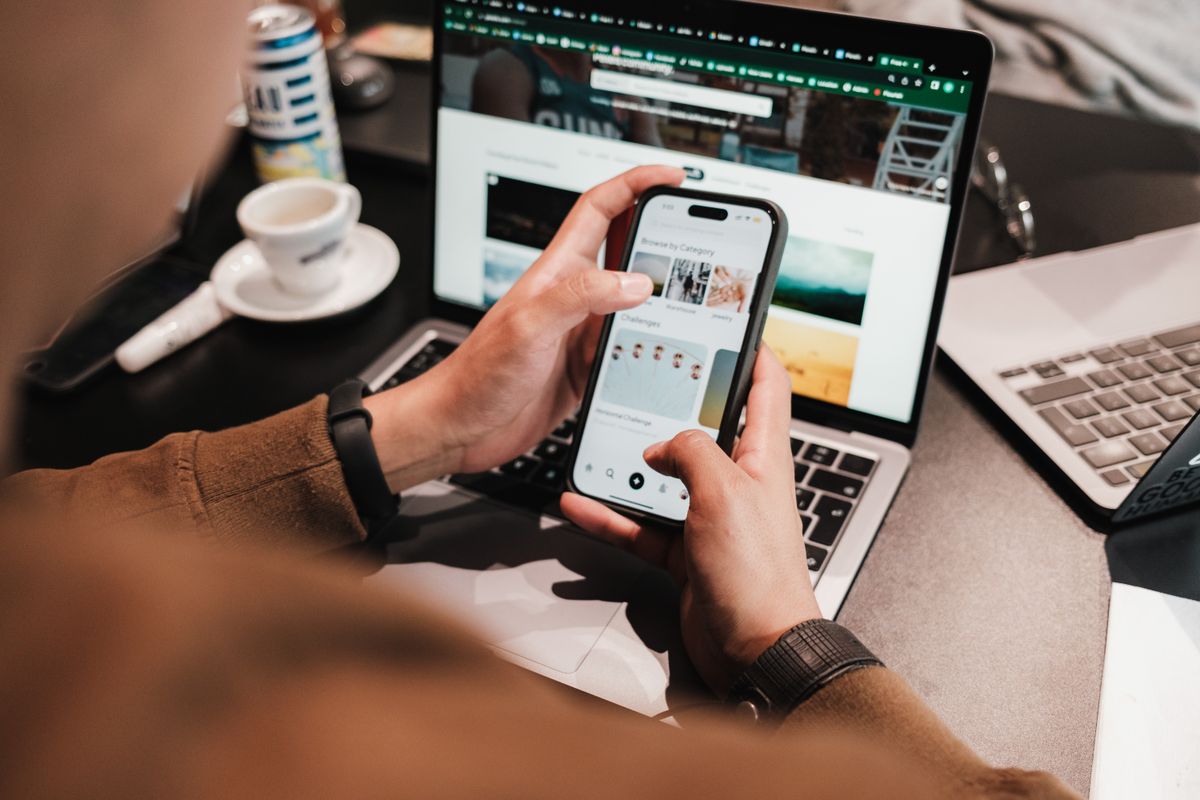 With a QR queue, your place lives on your phone, so you can wait anywhere instead of hovering by a screen. Photo: Airam Dato-on via Pexels.
Side by side
Here is the same shop, two systems.
- Order and fairness: Ticket machine, a number everyone can see. QR queue, a position everyone can see. Tie.
- Cost to start: Ticket machine, buy hardware plus ongoing paper. QR queue, print a code, no hardware. QR wins.
- The wait itself: Ticket machine, stand and watch the screen. QR queue, wait anywhere and get notified. QR wins.
- Wait time shown: Ticket machine, just a number. QR queue, a live "about X minutes." QR wins.
- Doorway crowding: Ticket machine, people cluster by the display. QR queue, people spread out. QR wins.
- Works without a smartphone: Ticket machine, yes, paper suits everyone. QR queue, needs a phone. Ticket machine wins.
- Fits a rented small shop: Ticket machine, needs wall space and mounting. QR queue, a card on the counter. QR wins.
When a ticket machine still makes sense
I said this would be honest, so here it is: the ticket dispenser is not obsolete, and there are places I would still choose it.
If your customers largely do not carry smartphones, or are not comfortable using them, paper is more inclusive, full stop. A pharmacy serving a lot of older customers is the classic case, and we get into that balance in our piece on cutting pharmacy counter queues. High-volume public offices with staff to manage the machine and a big waiting hall are another. If that is you, the old red box earns its place.
The good part: it is not all-or-nothing. Plenty of shops run a QR queue for the phone-carrying majority and keep a simple fallback for anyone who would rather not scan. The two can coexist on the same counter.
What fits a small shop
For most small, walk-in businesses, a barbershop, a café, a small clinic, a QR queue does everything the ticket machine did and fixes the parts that never suited a small space. It keeps the line fair, it costs nothing to start, and crucially it lets people wait away from your counter instead of crowding it, which is the whole difference between a shop that looks calm and one that looks slammed.
If you have been pricing up a ticket dispenser, it is worth trying the no-hardware version first. Filaro turns your line into a QR code customers scan to join from their phone, with a live position and wait time, no app and no machine to mount. You can set it up in an afternoon and see how your counter feels tomorrow, before you drill a single hole in the wall.
Photos via Pexels: people in line by Cátia Matos, customer on their phone by Airam Dato-on.